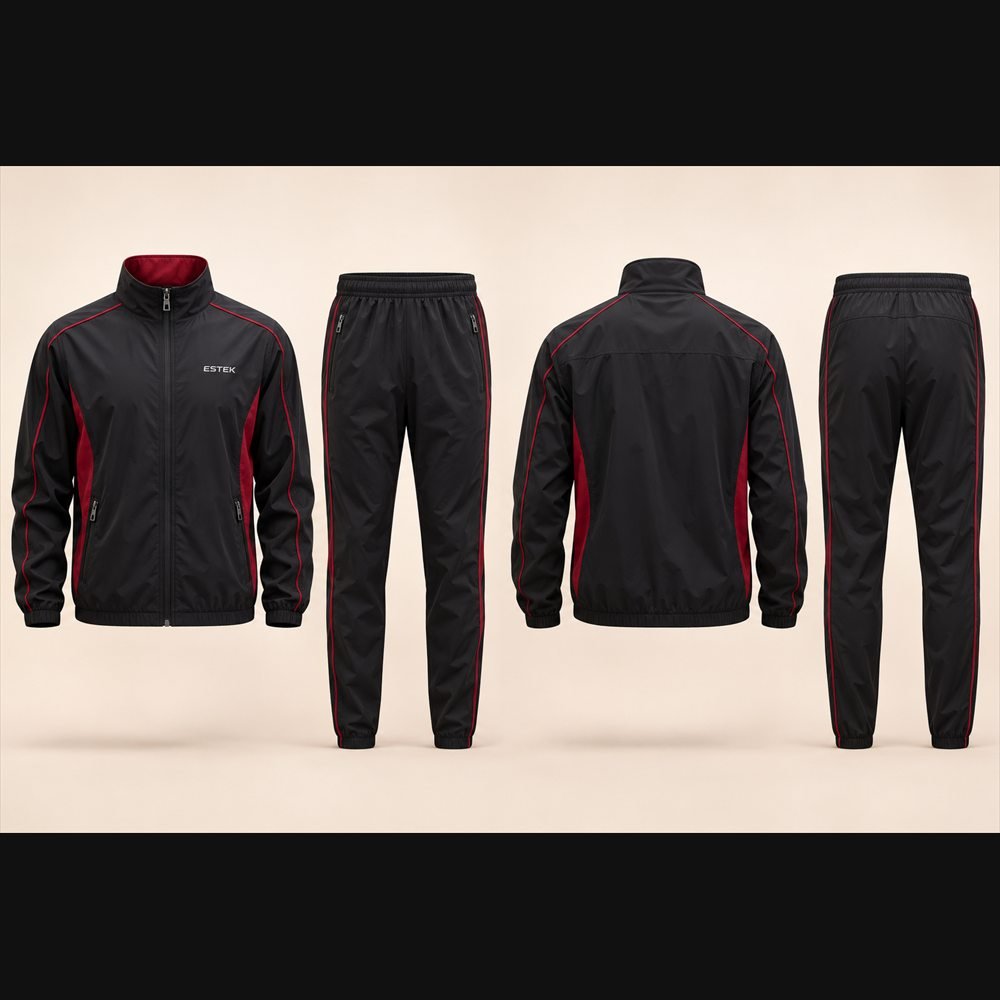
A coordinated activewear range can include several garment types with different movement and layering needs. Specify each piece first, then connect them through colour and branding.
Organize the range by activity and layer
List the pieces you want to develop, such as training shirts, trousers, shorts and windbreakers. Note when and how each will be worn, what it layers over and whether it belongs to a matching set. This helps distinguish a lightweight outer layer from a close-fitting training garment.
Specify fabric characteristics per product
For each style, describe preferred fibre content, weight, stretch, recovery, opacity, surface and care. A fabric suitable for a windbreaker may not be right for a training top. Use swatches or garments as references and identify which characteristics are essential versus open to review.
Make fit and function measurable
Describe body shape, sleeve coverage, rise, inseam, leg opening, waistband, pocket placement, closures and ventilation details where relevant. Share a size chart with a base size and clear measurement points. If the range uses a single fit across multiple pieces, state how the proportions should relate.
Connect the pieces visually
Choose a colour palette, panel language and logo system that can be repeated without making every item identical. Map print or embroidery on each garment, including scale and position. Specify reflective elements or other functional details only where they are genuinely part of the product brief.
Sample the range in a useful order
Start with the garments that carry the most uncertainty around fit, fabric or construction. Review each sample against its own chart, then compare the full range for colour, branding and overall styling. Keep the comments, artwork and material references together by style and revision.
Build the OEM project handoff
Send the product list, design views, size breakdown, artwork, material preferences, quantity estimate and target timing. Clarify the delivery market and any care or label requirements provided by your team. Confirm available options and order details for each style before final approval.
Before you send the activewear brief
Organize these product details so the initial OEM discussion can address the actual design:
- Product list and intended activity or layering role for each piece.
- Separate fabric, fit and size details for shirts, bottoms and jackets.
- Stretch, recovery, opacity, surface and care expectations by garment.
- Colour palette, panel map, artwork and decoration placements.
- Quantity estimate by style, size and colourway.
Sample review checkpoints
Review the sample against the current specification and record any changes to:
- Movement, fit, waistband, pocket and closure details by product.
- Material behaviour and colour across the proposed set.
- Artwork, seams, hems and measurements against each style chart.
Keep the approved reference, measurement chart, sample photos and revision notes together. Confirm final materials, fit, construction, decoration, availability and order terms for the specific project.
Use the Activewear range as a starting point for your product brief. Final materials, fit, construction, decoration, availability, order terms and timing should be confirmed for the specific project.