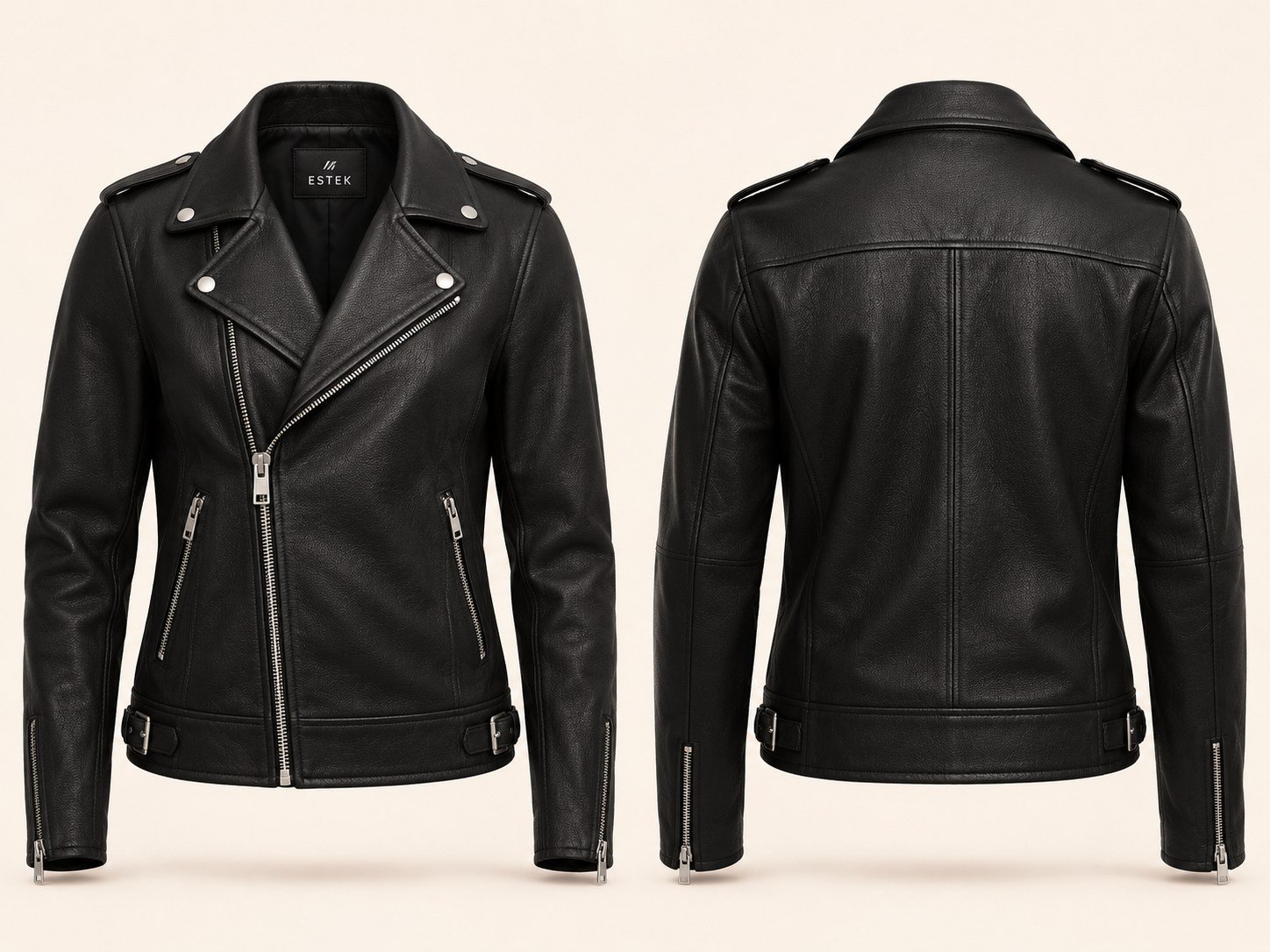
Leatherwear styles can differ greatly in structure and use. Define the product type and its material, fit and finishing details before combining it into a collection.
Separate the products in the collection
List jackets, vests, corsets and gloves as separate styles, each with its own reference, size range and intended use. Do not assume one material or construction specification applies across the collection. For each item, note whether it is fashion, teamwear or another use and what the wearer should be able to do in it.
Describe material and surface honestly
State whether the brief calls for genuine leather, a synthetic alternative or an option to compare. Specify the desired grain, sheen, colour, thickness or hand feel where known and provide a physical reference if possible. Confirm material availability, finish and care information for the exact style and order.
Map construction, lining and hardware
Use front, back and close-up views to identify panels, seams, lining, pockets, closures, zips, snaps, lacing, cuffs and hems. For gloves, specify hand, fit, length, closure and any grip or lining details. For corsets, document panel shape, closure and fit requirements with particular care.
Give fit and size information for each style
Provide points of measure, a base size, the size range and the intended layer underneath a jacket or vest. For close-fitting garments, clearly define the fit method and any adjustability. Keep glove sizing separate from garment sizing and identify the measurement system your brand uses.
Review the sample for finish and wear
Inspect material consistency, surface finish, seam placement, lining, hardware operation, edges and branding. Check how the garment moves and whether closures or fit details work as intended. Record comments with clear photos and keep corrections tied to the sample revision. Confirm care and market labelling requirements with your own compliance team.
Prepare a leatherwear OEM enquiry
Send product-specific drawings, material references, size charts, colour choices, hardware details, artwork, quantity estimate and requested timing. Identify which requirements are fixed and which can be discussed. Confirm material sourcing, available finishes, sampling and commercial terms directly for the styles being considered.
Before you send the leatherwear brief
Organize these product details so the initial OEM discussion can address the actual design:
- Separate style specifications for jackets, vests, corsets and gloves.
- Genuine or synthetic material preference, finish and physical reference.
- Panels, lining, closures, hardware and branding placements by style.
- Fit method, garment size chart and separate glove sizing details.
- Care and market label requirements supplied by your compliance team.
Sample review checkpoints
Review the sample against the current specification and record any changes to:
- Material finish, colour consistency, edges and seam construction.
- Lining, closures and hardware operation on the intended product.
- Fit, movement, glove sizing and decoration against the correct revision.
Keep the approved reference, measurement chart, sample photos and revision notes together. Confirm final materials, fit, construction, decoration, availability and order terms for the specific project.
Use the Leather jackets range as a starting point for your product brief. Final materials, fit, construction, decoration, availability, order terms and timing should be confirmed for the specific project.