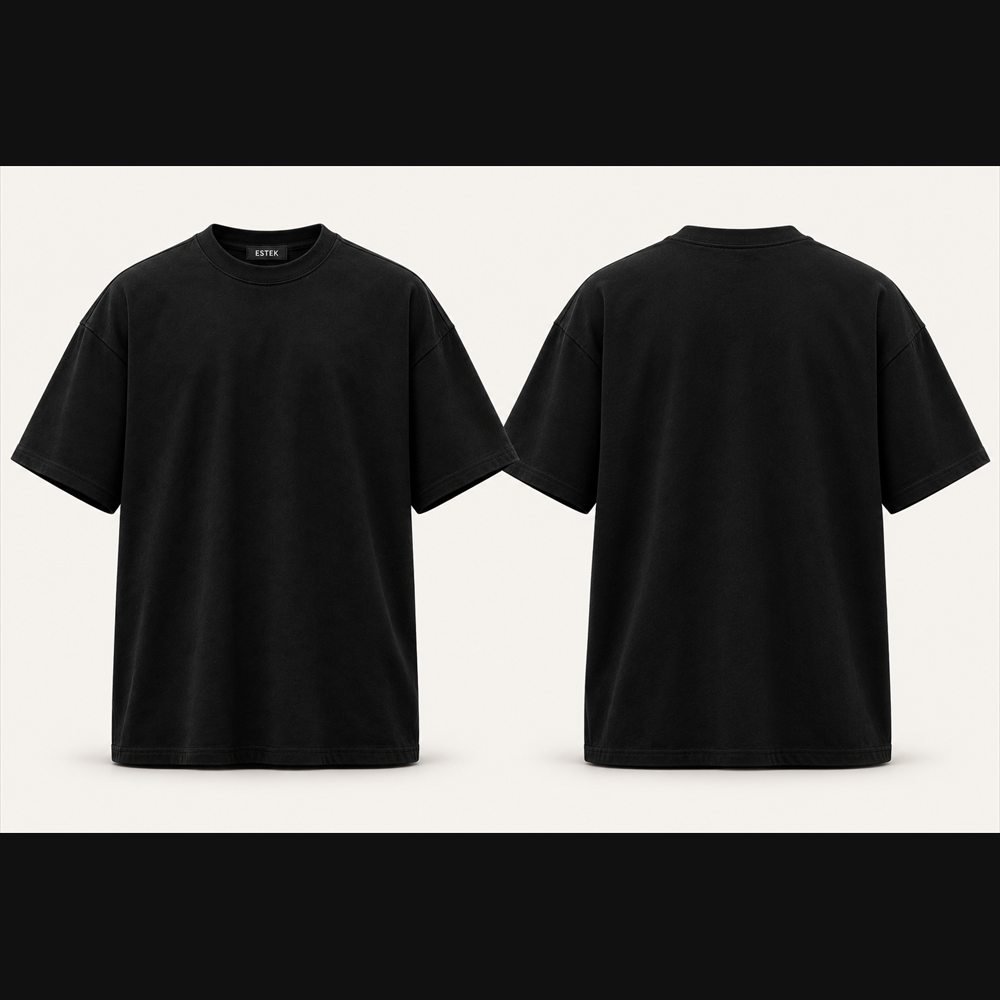
A casual T-shirt collection depends on the hand feel, shape and artwork working together. Give your manufacturer clear references for each decision.
Define what “cotton T-shirt” means for your range
Specify the preferred fibre content, knit construction, weight, surface and hand feel where known. Note whether the fabric should feel crisp, soft, dry, smooth or textured, and provide a reference garment or swatch. The term “cotton” alone does not establish the finished weight, drape or care behaviour.
Choose a silhouette and size chart
Describe the neckline, shoulder position, sleeve length, body width, body length and hem shape. State the intended fit, such as regular, relaxed or oversized, and send a measurement chart with a base size. If the range includes different fits, provide a separate specification for each silhouette.
Prepare print and embroidery artwork
Show each graphic on front, back and sleeve views. Include artwork files, finished dimensions, placement from garment seams and colour references. Identify whether an item uses a screen-style print, puff effect, embroidery or another treatment. Keep plain styles in the range if they serve a clear role, such as a core colour or layering piece.
Think about the wearer and the artwork
Consider how the print or embroidery feels against the body, how a large graphic changes the look of the garment and whether the design remains clear across size grading. For illustration or character artwork, supply original or properly licensed files and confirm the intended usage rights before production.
Review the sample and decoration
Check the sample against the size chart and reference garment. Review neckline shape, shoulder seam, sleeve and body length, fabric appearance, print position and embroidery finish. Follow your brand’s own wash and wear evaluation process, then record revisions before approving the final specification.
Send a complete T-shirt enquiry
Include the garment references, fabric preference, colours, fit chart, artwork, label details, size range, quantity estimate and requested timing. Identify required packaging or market labelling details supplied by your team. Ask for confirmation of material and decoration options for the specific design.
Before you send the t-shirts brief
Organize these product details so the initial OEM discussion can address the actual design:
- Preferred fibre content, knit, weight, hand feel and reference swatch.
- Fit, neckline, shoulder, sleeve, body length and base-size measurements.
- Artwork files with print or embroidery method, colour and placement.
- Separate specifications for each silhouette or colourway.
- Label, care, packaging and market details supplied by your team.
Sample review checkpoints
Review the sample against the current specification and record any changes to:
- Neckline, shoulder, sleeve and body measurements.
- Fabric appearance and hand feel against your reference.
- Graphic scale, placement, embroidery coverage and decoration finish.
Keep the approved reference, measurement chart, sample photos and revision notes together. Confirm final materials, fit, construction, decoration, availability and order terms for the specific project.
Use the T-shirts range as a starting point for your product brief. Final materials, fit, construction, decoration, availability, order terms and timing should be confirmed for the specific project.