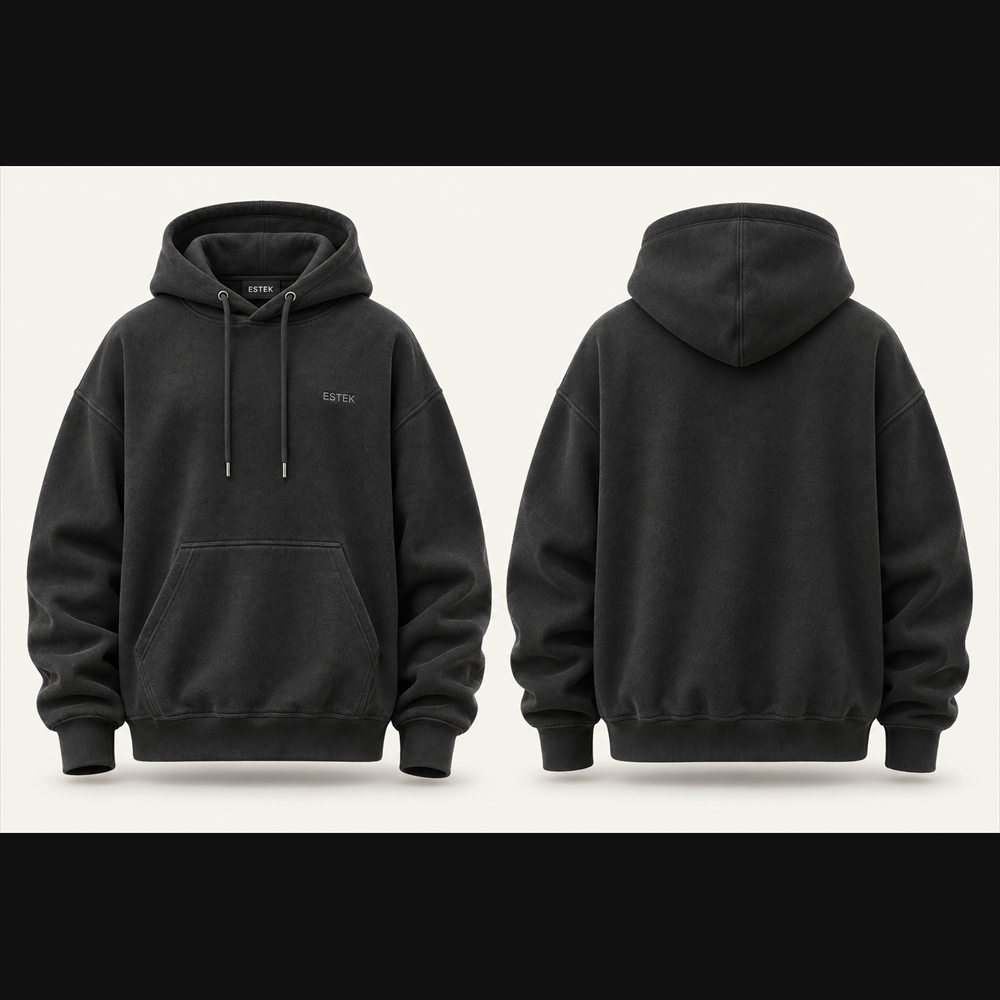
A strong hoodie brief covers the shape, fabric and artwork together. Use these checkpoints to develop a casual collection that feels intentional rather than generic.
Choose the silhouette and construction
Decide between pullover and zip styles, then specify the hood shape, drawcord, pocket type, shoulder construction, cuff, hem and body length. State whether the fit is regular, relaxed, oversized or cropped and provide measurements for a base size. If the hoodie belongs to a set, link the matching pieces in the brief.
Describe the fabric by feel and use
Identify whether you want fleece, French terry or another cotton blend, and describe weight, interior finish, surface, drape and care expectations. “Heavyweight” or “soft” should be supported with a sample, swatch or measurable reference where possible. Confirm available materials and colour options for the specific style.
Make the artwork part of the design
Map front, back and sleeve graphics, including dimensions, placement and colour. A small chest embroidery can work differently from a large back print. Identify print, puff print, embroidery, chenille or heat-applied decoration as a requirement or a preference, then review the finish on the garment material.
Create a cohesive collection
Use a planned palette and a consistent graphic system across colours and related styles. Decide which pieces are plain, which carry a small mark and which use a statement graphic. Check that logos remain legible on both light and dark fabrics and provide separate artwork versions where needed.
Review fit and finishing on the sample
Measure body width, length, sleeve and cuff against the chart. Try the garment over the intended base layer, inspect hood shape and pocket function, and check shrinkage or wash expectations with your own review process. Record print or embroidery alignment, stitch quality, loose threads and any changes required.
Prepare a private-label hoodie enquiry
Send reference views, fabric preferences, colourways, artwork, label details, size range, quantity estimate and requested timing. Separate must-have requirements from design ideas open to discussion. Confirm available materials, sampling steps and commercial terms for the intended order.
Before you send the hoodies brief
Organize these product details so the initial OEM discussion can address the actual design:
- Pullover or zip style, hood, pocket, cuff, hem and silhouette.
- Fabric reference, weight or hand feel, colour and interior finish.
- Front, back and sleeve artwork with method, scale and placement.
- Size chart, intended fit, label details and quantity by colour.
- Which styles are plain, embroidered or carry larger graphics.
Sample review checkpoints
Review the sample against the current specification and record any changes to:
- Body, sleeve and hood proportions against the measurement chart.
- Pocket, drawcord, zipper and cuff details in use.
- Print or embroidery feel, colour, alignment and finish on the sample.
Keep the approved reference, measurement chart, sample photos and revision notes together. Confirm final materials, fit, construction, decoration, availability and order terms for the specific project.
Use the Hoodies range as a starting point for your product brief. Final materials, fit, construction, decoration, availability, order terms and timing should be confirmed for the specific project.